January 6, 2026
Understanding the latest kitchen design trends is essential for homeowners who want to create a space that is both visually striking and highly functional. As the kitchen continues to serve as the heart of the home—hosting everything from daily meals to social gatherings—its design must balance style, efficiency, and long-term usability. Modern remodeling decisions are increasingly influenced by sustainability, technology, and personalized aesthetics, making it more important than ever to stay informed before beginning a renovation project. Thoughtful planning guided by current trends can help homeowners avoid costly mistakes while maximizing both comfort and resale value.
Sustainable and Eco-Friendly Designs
Embracing sustainable and eco-friendly designs begins with the use of recycled materials. Modern kitchens are increasingly featuring countertops and cabinetry derived from recycled content, such as glass or post-consumer plastics. This not only reduces waste but also infuses the kitchen with unique textures and appearances. Choosing recycled materials is a proactive step towards environmental responsibility while enhancing the aesthetic appeal of your kitchen. The result is a space that is stylish, sustainable, and uniquely personalized to your environmental values.
Energy-efficient appliances form a cornerstone of any sustainable kitchen design. By incorporating appliances that consume significantly less energy, homeowners can dramatically reduce their kitchen's overall carbon footprint. Innovations in appliance technology have led to the creation of refrigerators, ovens, and dishwashers that offer superior performance with less energy consumption. Energy-efficient appliances not only contribute to environmental conservation but also represent significant cost savings on utility bills over time. They offer a win-win solution where functionality meets sustainability.
Incorporating water-saving fixtures in
kitchen designs is another critical component of sustainability efforts. From low-flow faucets to efficient dishwashers, water-saving technologies help conserve one of our most precious resources. These fixtures maintain high performance while significantly reducing water consumption, resulting in both ecological and financial benefits. Homeowners adopting these features contribute to water conservation efforts while enjoying reduced water bills. Water-saving fixtures reflect a growing awareness of sustainable living in everyday practices.
Opting for low-VOC paints in kitchen remodeling is a trend gaining strong momentum. These paints release fewer volatile organic compounds, contributing to healthier indoor air quality. The use of low-VOC paints supports both individual well-being and wider environmental health by minimizing harmful emissions. As awareness of these benefits prevails, homeowners increasingly prefer low-VOC options for their kitchen revamps. These eco-friendly choices offer vibrant colors and lasting finishes without compromising health or the environment.
Integrating solar panels into kitchen designs empowers homeowners to harness renewable energy sources. Solar energy reduces reliance on fossil fuels, significantly cutting down energy costs and carbon emissions. Modern solar technologies are designed to efficiently power various kitchen operations, from lighting to appliance usage. As part of a comprehensive sustainable design strategy, solar panels contribute to developing autonomous energy systems at home. Solar integration embodies a forward-thinking approach, aligning with global sustainability objectives while fulfilling functional kitchen needs.
Open Shelving Concepts
Open shelving concepts are a staple of minimalist design, creating a sleek and airy kitchen environment. By eliminating traditional closed cabinetry, spaces feel larger and more open, offering an aesthetic of simplicity and order. Open shelves showcase items that might otherwise be hidden, leading to thoughtful organization and visual appeal. This trend aligns perfectly with modern sensibilities seeking efficiency and style in functional spaces. The minimalist approach is not just about aesthetics; it enhances functionality and accessibility in daily kitchen use.
Open shelving offers abundant opportunities for display, turning everyday kitchenware into decorative elements. Dishware and cookware become focal points, carefully curated to contribute to the overall kitchen design. This visibility allows for a personal touch, where homeowners can express their style through the colors and textures of displayed items. By integrating open shelving, kitchens transform into personalized galleries that reflect individual tastes and preferences. This trend embraces the idea that functionality and beauty can coexist harmoniously in kitchen spaces.
Enhanced accessibility is a practical advantage of open shelving, making frequently used items easy to reach. This accessibility reduces the time and effort involved in daily kitchen activities, contributing to efficient space use. Open shelves encourage users to maintain an organized kitchen, where everything has its place and is readily available. The clutter-free nature of these designs simplifies cooking and meal preparation processes, enhancing user experience. Accessibility is not merely a functional benefit; it embodies a philosophy of thoughtful living through intelligent design solutions.
Open shelving concepts offer a cost-effective alternative to traditional cabinetry, reducing expenses on materials and labor. By eliminating the costs associated with upper cabinets, homeowners can invest in other kitchen improvements. The economic advantage is complemented by the aesthetic benefits, offering an affordable way to enhance the kitchen's appearance. Cost-effective designs empower more people to participate in remodeling projects, broadening access to modern design trends. This trend proves that stylish and functional kitchens are attainable on various budget scales.
Open shelving is versatile, with vast material options such as wood, glass, and metal, each bringing its character and charm. Wood shelves add warmth and traditional appeal, while glass offers a contemporary, airy feel. Metal shelves, like those made of brass or copper, provide an industrial or modern chic look to complement diverse kitchen styles. This variety enables homeowners to tailor their kitchen ambiance uniquely, enhancing personalization opportunities. The adaptability of shelving materials makes it a favored choice for diverse design visions.
Bold Color Palettes
The trend of using rich cabinet colors like deep blues, greens, and blacks introduces dramatic flair to kitchen interiors. This bold choice diverges from traditional neutrals, offering a refreshing departure to colorful sophistication. Such vibrant hues impart depth, character, and statement, transforming kitchen aesthetics with vivid allure. They create impactful narratives within spaces, resonating with modern design preferences for unique and expressive environments. This design choice makes a kitchen floor plan vibrant, emphasizing creativity and style in home interiors.
Incorporating contrasting elements within a kitchen's color scheme enhances visual appeal, encouraging exciting design dynamics. Mixing bold cabinet colors with neutral countertops and backsplashes achieves a harmonious yet striking effect. This play of contrasts elevates kitchen designs, highlighting architectural features and maximizing space attributes. Contrasting colors create focal points, driving attention to specific design elements while balancing the overall aesthetics. It's a non-conventional approach that invites intrigue and elegance through deliberate color interactions.
Color psychology in kitchen design enhances mindfulness by choosing hues that resonate with mood and desired atmosphere. Cooler tones like blues and greens promote tranquility, while warmer tones like reds and yellows inspire warmth and activity. Understanding these effects empowers homeowners to create kitchens that fulfill both aesthetic and emotional desires. This trend underscores the connection between color choice and overall well-being within living environments. Applying color psychology results in carefully curated spaces that foster positive energy and improved quality of life.
Mix of Textures and Materials
The strategic use of stone and wood combinations in kitchens creates visually compelling juxtapositions of natural materials. Pairing rugged stone textures with smooth wood veneers brings warmth and elegance. This trend enhances not only aesthetic appeal but also introduces variations in texture, contributing to a rich tactile experience. It bridges classic and contemporary styles, accommodating a wide range of design interpretations for distinct kitchen personalities. The mixture of organic materials aligns with sustainability trends, supporting eco-friendly choices in kitchen transformations.
Metal accents, such as brass or copper finishes, introduce modern or industrial elements to kitchen interiors. These metals provide a polished, reflective sheen that contrasts beautifully with matte or wood surfaces. Metal highlights add sophistication, emphasizing certain areas while fulfilling functional roles in fixtures or hardware. The inclusion of such materials in kitchen designs reflects a preference for edgy modernism and timeless elegance. The result is a kitchen that balances utility and design excellence through a blend of textures and finishes.
Textured backsplashes offer depth and character to kitchen spaces, moving beyond traditional flat tiling. Utilizing dimensional tiles or materials provides an engaging focal point above countertops, adding artistic flair. This trend allows creativity and personal expression, delivering bespoke design experiences within what can often be mundane spaces. Textured backsplashes break monotony, introducing dynamic visual and tactile elements that enrich the overall kitchen environment. Such inventive applications elevate kitchen interiors by catering to the senses through thoughtful material application.
Incorporating concrete elements into kitchens lends an industrial edge and urban vibe to contemporary designs. Concrete countertops or flooring provide durability with an aesthetic grounded in simplicity and minimalism. The versatility of concrete lies in its ability to complement a range of styles, from modern minimalistic niches to rustic loft settings. Its raw, unfinished texture appeals to those seeking unique yet practical enhancements to their kitchen designs. Concrete features underscore a preference for durable, low-maintenance materials that embody urban sophistication and resilience.
Introducing mixed fabric seating options can add coziness and aesthetic diversity to kitchen diners or breakfast bars. By combining various upholstery materials, such as leather with fabric, texture creates compelling contrasts in seating areas. This mix offers visual interest and comfort, aligning with trends favoring tactile richness in home designs. Various fabric options invite character into kitchens, reflecting personal choice and enriching seating designs. Mixed fabric seating is a testament to the kitchen’s role as a central hub, where style meets social interaction.
Multipurpose and Flexible Spaces
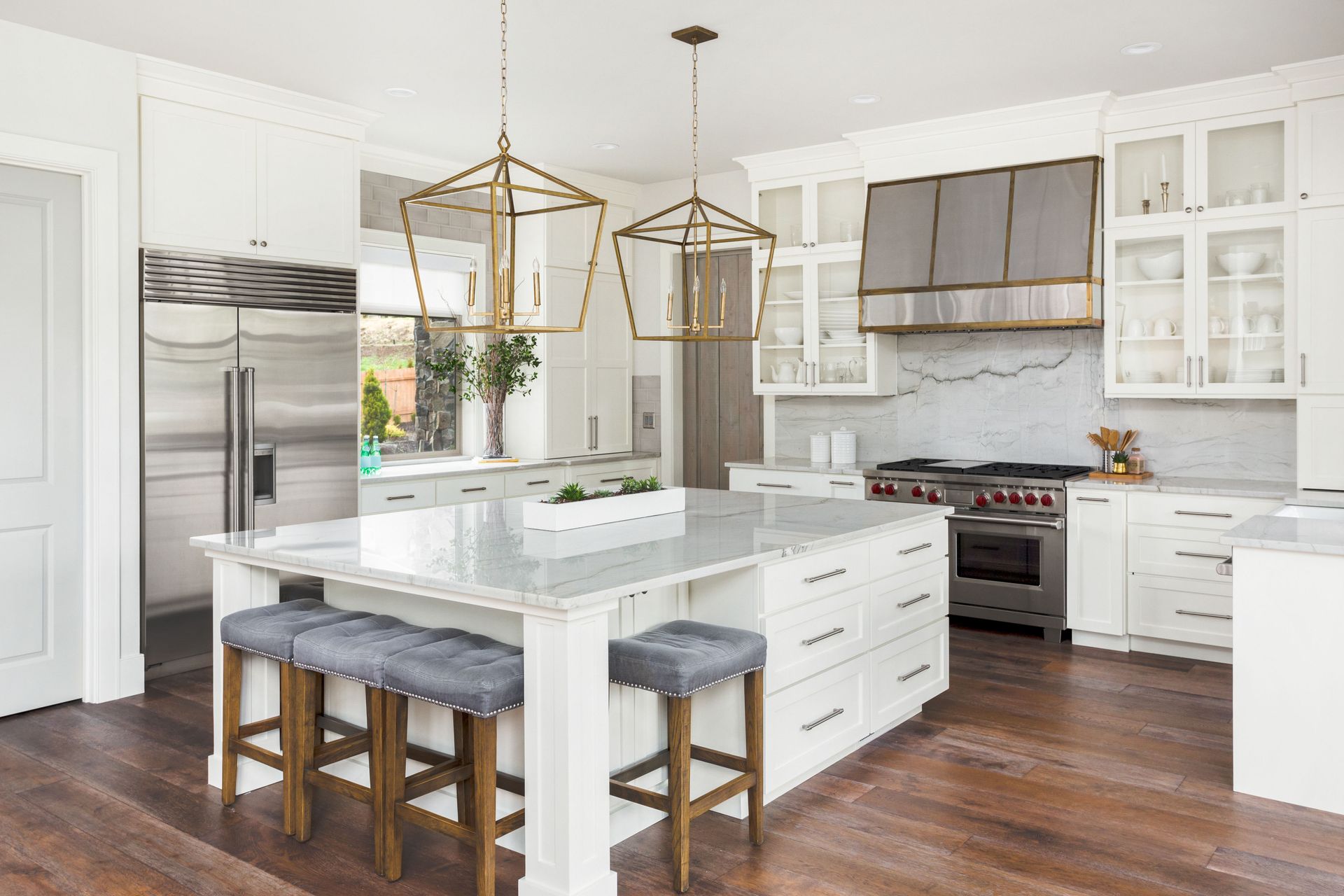
Kitchen islands epitomize the trend towards multipurpose spaces, serving as eating, preparation, and even storage areas. A well-designed island enhances functionality, optimizing space for both work and leisure in an integrated manner. With thoughtful design, islands support seamless transitions between meal prep, cooking, and socializing, connecting people within the kitchen. The growing popularity of expanding kitchen size during remodels caters to accommodating islands within layouts. According to Houzz, more than a third of homeowners (35%) increase the footprint of their kitchen during a renovation. This multifunctional design aspect maximizes usability and fosters social interaction within the heart of the home.
Convertible furniture embodies flexibility, adapting to various functions as needed within kitchen environments. A dining table may fold into a workspace or a bench may provide additional seating, reflecting versatility and space efficiency philosophies. Leveraging convertible pieces supports smaller kitchens, where adaptability is key to maximizing utility and convenience. This creativity extends beyond seating to other forms, like collapsible counter space or modular storage solutions, aligning with the increasing demand for functional small-space adaptations. Embracing flexible designs redefines how kitchen spaces can meet evolving household needs and preferences.
Innovative hidden storage solutions address the perpetual demand for maximizing organization within kitchen designs. By cleverly concealing storage, kitchens maintain a streamlined and clutter-free appearance while enhancing functional capacity. Pull-out pantries, under-bench drawers, and integrated compartments exemplify effective methods to utilize every inch of space efficiently. The drive towards increasing kitchen footprints echoes this trend, with homeowners using expansion to accommodate more hidden storage. It's a sophisticated approach that prioritizes utility without compromising on modern, minimalistic aesthetics.
Remodeling your kitchen with these trends in mind can create a space that is both functional and aesthetically pleasing. By incorporating sustainability, smart technology, and flexible design, you're sure to craft a kitchen tailored to the future. Embracing modern influences enhances the value, enjoyment, and efficiency of kitchen environments, aligning with lifestyle desires and environmental consciousness. Engaging these contemporary trends paves the path to transformative kitchen experiences that reflect both personality and promise for longevity. It's an exciting prospect where design meets purpose, forging new frontiers in the heart of the home. Contact Superior Kitchen & Bath, Inc for more information.