January 5, 2026
A kitchen is more than a place to prepare meals—it's the heart of your home, a gathering spot, and a hub for daily activity. Selecting the right kitchen design layouts is essential for achieving the perfect balance between style, functionality, and comfort. As homes continue to age—and with the average American home now around 40 years old, according to Eye on Housing—many homeowners are ready for a remodel that brings modern efficiency to an older space. Understanding the strengths of each layout will help you make informed decisions that align with your home’s structure and your lifestyle.
What Are the Most Common Types of Kitchen Design Layouts?
Before you begin choosing finishes, appliances, or cabinetry, it’s important to explore the core kitchen design layouts that shape your entire space. Each layout has its own advantages, challenges, and visual appeal. The five most common options include the galley, L-shaped, U-shaped, peninsula, and island layouts.
The galley layout is a classic choice that positions cabinets and appliances along two parallel walls. This creates a streamlined cooking corridor that supports strong workflow efficiency. Many older homes naturally accommodate this style, which makes it a popular starting point during renovations.
The L-shaped layout provides more open movement by placing cabinets and appliances along two adjoining walls. This design offers flexibility with appliance placement and works well for both small and medium-sized kitchens. Homeowners often choose this style when they want a balance of workspace and breathing room.
U-shaped layouts surround the cook with three connected walls of cabinetry and appliances, forming a functional “work zone.” This setup offers generous storage and countertop space, making it ideal for homeowners who love hosting or cooking frequently.
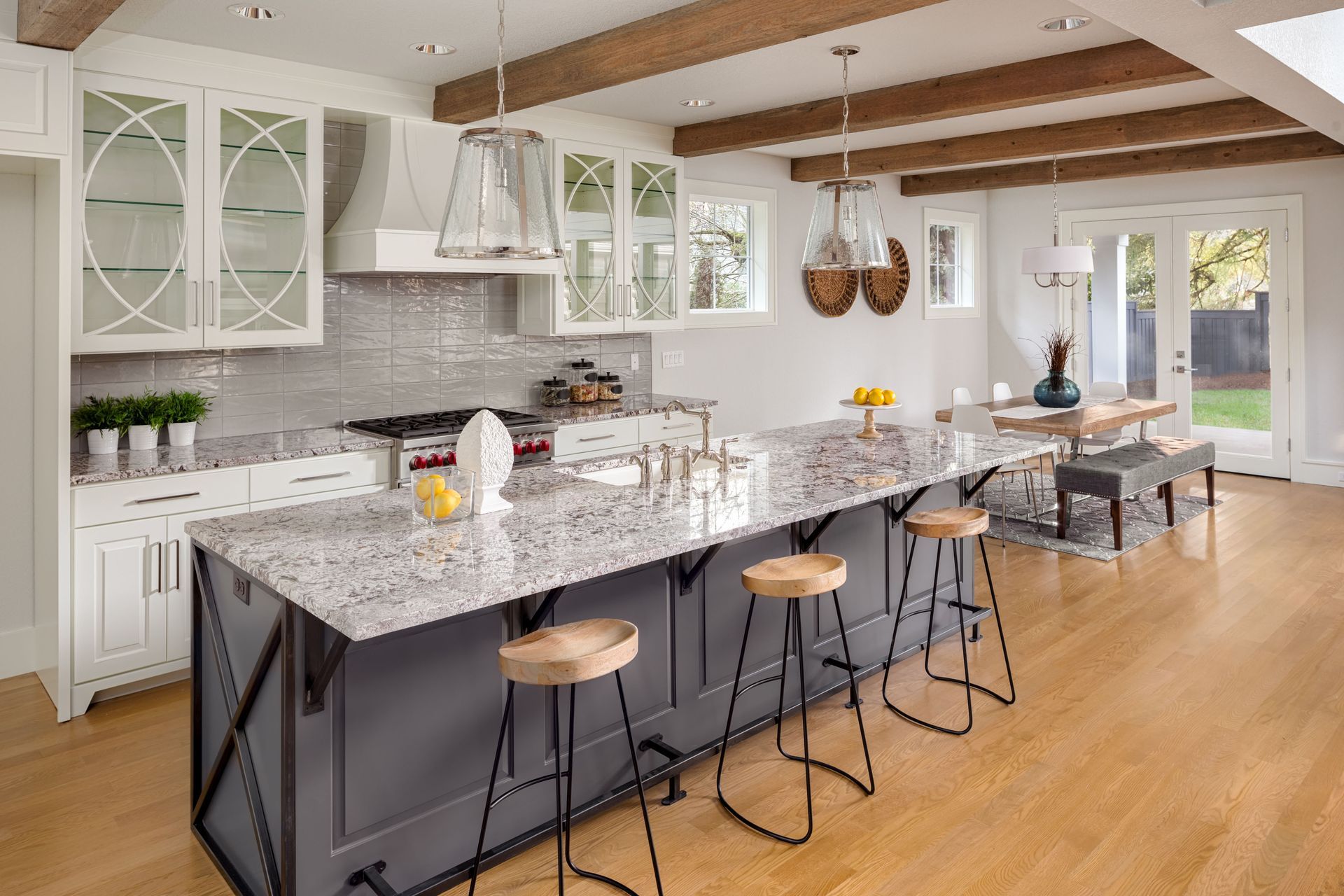
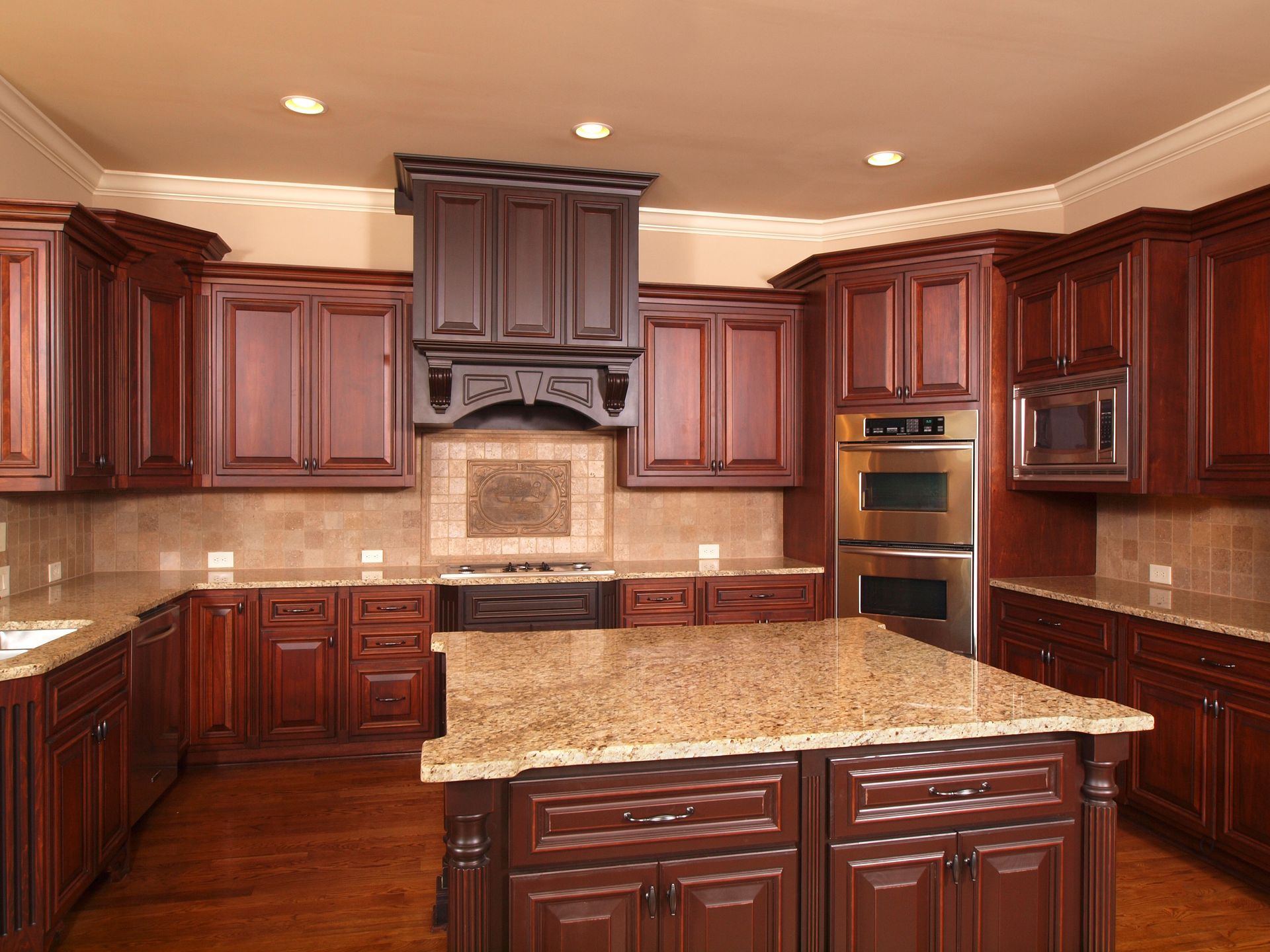
Peninsula and island layouts serve as expansions of the core formats. A peninsula adds an extended counter connected to an existing wall, while an island places a freestanding counter in the middle of the room. Both styles are popular in modern kitchen design layouts because they add workspace, enhance traffic flow, and create seating opportunities.
How Do I Choose a Kitchen Layout That Fits My Space?
Selecting the right layout depends heavily on your room’s size, shape, and traffic flow. The configuration you choose should support your everyday routine and maximize your kitchen’s efficiency. For example, a narrow room may naturally guide you toward a galley layout, while a wide-open floor plan offers the flexibility to incorporate an island or peninsula.
When analyzing your space, start by identifying the kitchen’s fixed points. Windows, doors, plumbing, and electrical lines can influence which kitchen design layouts are realistic. In older homes—many of which were constructed several decades ago—structural limitations may restrict or guide cabinetry placement. This makes an understanding of each layout essential, especially if you plan to update a 40-year-old kitchen that wasn’t built with modern lifestyles in mind.
It also helps to think about how you move through the room. If you enjoy entertaining, an open layout with an island or peninsula may better support guests and conversation. If you prefer a streamlined work environment, an enclosed galley or U-shape can reduce unnecessary steps and keep everything within reach.
Which Kitchen Design Layouts Are Ideal for Small Spaces?
Small kitchens come with unique challenges, but the right layout can significantly improve functionality. Two kitchen design layouts particularly well-suited for compact spaces are the galley and the L-shape.
The galley layout is often considered a small kitchen’s best friend. With cabinets lined up against two parallel walls, it maximizes storage and minimizes wasted space. In older homes that have narrow floor plans, this layout is often simple to implement because it uses the existing footprint.
The L-shaped layout is another strong contender for smaller kitchens. Its open corner allows for better movement, making the room feel larger. It also provides flexibility with appliance sizes and placement, which is useful when remodeling an older home where dimensions may not be standard.
A peninsula can also be used creatively in a tight kitchen to add workspace without requiring a full island. While island layouts often work best in medium or large rooms, a small island can sometimes be incorporated into compact kitchens if traffic flow remains unobstructed.
How Can Kitchen Layouts Affect Workflow and Efficiency?
Good kitchen design supports efficiency, and the layout plays a direct role in how smoothly you cook, clean, and interact within the space. The classic “kitchen work triangle” is a helpful guide here: the stove, refrigerator, and sink should form a triangle that allows for easy movement between them. Different kitchen design layouts accomplish this with varying degrees of success.
Galley kitchens often create an excellent triangle because the cook can rotate between tasks with minimal steps. U-shaped kitchens are similarly efficient, wrapping the homeowner in a practical workspace that simplifies cooking and cleaning.
L-shaped kitchens provide a slightly more open version of the triangle, reducing congestion but still keeping key appliances within reach. For homeowners who enjoy flexibility or want to add a small breakfast nook, this layout offers comfort without sacrificing function.
Island and peninsula designs improve efficiency by offering dedicated zones for prep work, cooking, and seating. This becomes especially useful in households where multiple people share the kitchen at once. With an island, you can designate one side for meal prep while the other functions as a casual dining area, reducing clutter and improving organization.
When thoughtfully designed, each of these
kitchen design layouts can enhance workflow, reduce stress, and make cooking more enjoyable—even in older homes that weren’t originally built with modern appliance sizes or family dynamics in mind.
What Are the Latest Trends in Kitchen Design Layouts?
Today’s homeowners are embracing layouts that support open living, multifunctional spaces, and efficient cooking. The island layout continues to be one of the most desirable kitchen design layouts, thanks to its versatility. Islands now serve as prep stations, storage centers, dining tables, and even hubs for charging electronics.
Another growing trend involves mixing layout styles. For instance, some homeowners combine an L-shaped kitchen with a floating island to maximize workspace without closing off the room. This hybrid approach is particularly popular in renovated homes where the original layout may feel restrictive.
Adding more smart storage solutions is also trending. Pull-out shelves, hidden drawers, and vertical storage systems can dramatically enhance older kitchens. Because the average American home is now 40 years old, many kitchens are overdue for storage upgrades that complement their layout.
Minimalist designs are becoming more common as well. Clean lines, unobstructed surfaces, and simple cabinetry blend seamlessly with multiple kitchen design layouts, especially in smaller homes where visual clutter can make the space feel tight.
Sustainability is another important trend. Homeowners are increasingly choosing energy-efficient appliances and eco-friendly materials. This shift fits naturally into most kitchen design layouts, especially when paired with modern lighting and improved insulation.
Choosing the right kitchen layout is an investment in comfort, efficiency, and long-term functionality. Whether you're considering an island, a galley, or a flexible L-shaped design, understanding the strengths of different kitchen design layouts ensures your remodel supports your lifestyle and enhances your daily experience. With thoughtful planning, your kitchen can become a beautiful and practical space that truly feels like the heart of your home. If you're looking to add beauty and function to your home with a new kitchen, reach out to the dedicated team of professionals at Superior Kitchen & Bath, Inc today!