June 9, 2026
Smaller homes often demand more from their kitchens than just cooking functionality. They need efficient movement, smart storage, and layouts that make limited square footage feel open rather than constrained. For many homeowners, this challenge becomes an opportunity to rethink how the kitchen supports daily life, entertaining, and long-term comfort.
Designing within tighter footprints also means making intentional choices about flow, proportion, and visual balance. That is where well-planned kitchen design layouts become essential. They influence how easily you move between prep zones, how much usable counter space you gain, and how visually connected the kitchen feels to surrounding rooms.
There is also a broader context shaping renovation decisions today. According to the National Association of Realtors, nearly half of homes in the United States are more than 40 years old and often still reflect kitchen styles and configurations rooted in earlier design eras. This creates a strong motivation for rethinking outdated spaces in favor of more efficient, modern approaches.
With the right strategy, even compact kitchens can feel spacious, functional, and inviting. The key is selecting a layout that aligns with both the structure of the home and the way you actually use the space.
Smart and Efficient Design Layouts for Compact Homes
Galley Configurations That Maximize Narrow Footprints
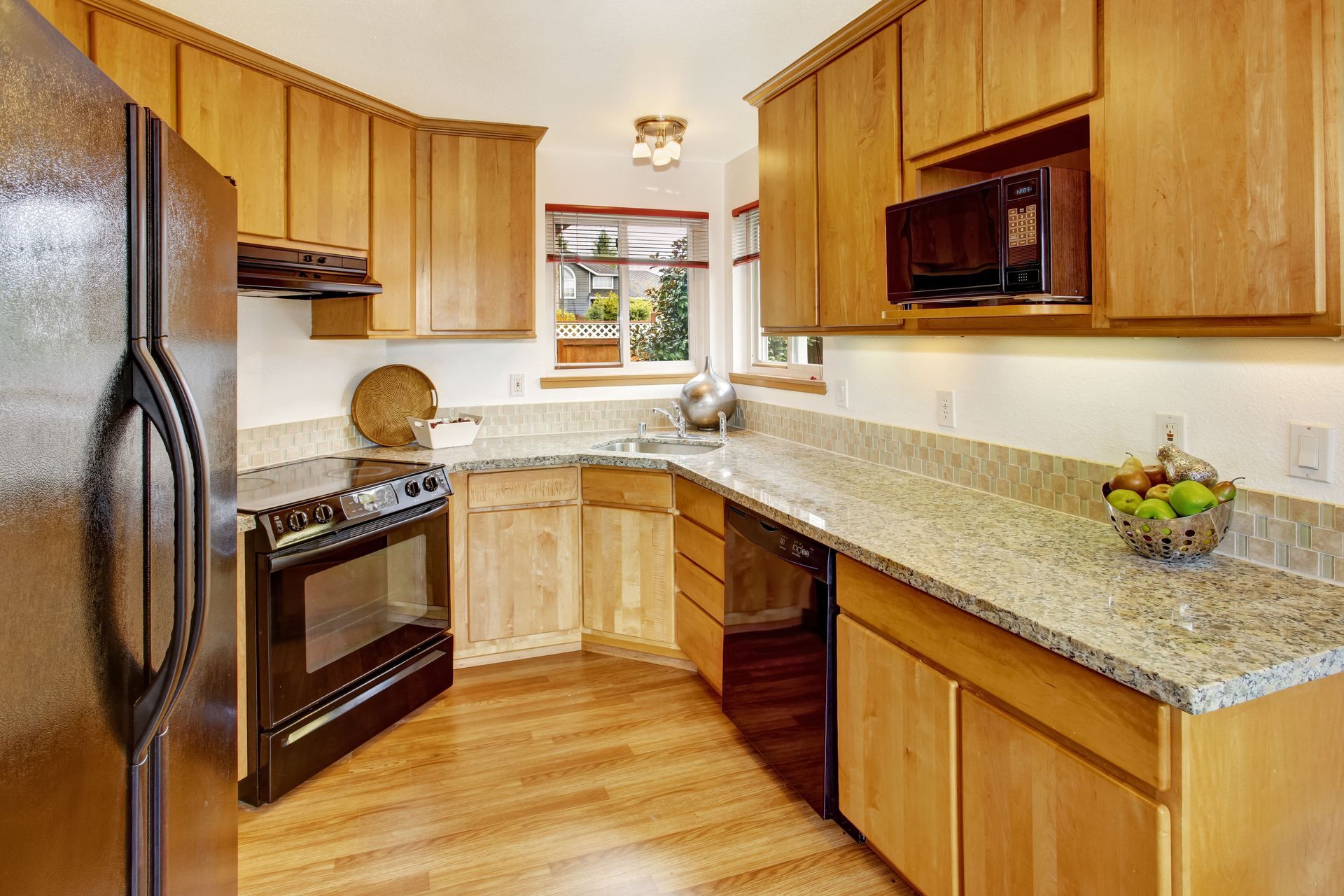
In many smaller homes, the galley format remains one of the most effective kitchen design layouts because it prioritizes efficiency over excess. By positioning two parallel countertops along opposing walls, this approach creates a natural workflow corridor that minimizes wasted movement. Everything is within reach, which can dramatically improve cooking speed and organization.
The strength of this configuration lies in its ability to turn narrow spaces into highly functional work zones. When properly executed, it reduces unnecessary steps between cooking, cleaning, and prep areas. Lighting also plays a key role in preventing the space from feeling closed in, especially when upper cabinetry is balanced with open shelving or reflective finishes.
Galley kitchens also adapt well to renovation projects where structural changes are limited. Instead of expanding outward, the design focuses on optimizing what already exists. This makes it especially valuable in older homes where walls may not be easily removed or reconfigured.
Single Wall Designs for Open Living Integration
Another highly efficient approach to kitchen design is the single-wall configuration. This format consolidates all major appliances, storage, and prep areas along one wall, freeing the remaining floor space for dining or living integration.
This design is particularly effective in studio apartments, smaller single-family homes, or open-plan renovations where maintaining visual flow is a priority. By reducing physical barriers, the kitchen becomes part of a larger living environment rather than a separate enclosed zone.
Storage strategy becomes especially important here. Vertical cabinetry and carefully planned shelving help compensate for reduced horizontal space. The result is a clean, streamlined appearance that supports both practicality and visual simplicity.
Transitional Open Concepts That Expand Perception
Open-concept planning has become one of the most influential kitchen design layouts for smaller homes seeking a sense of spaciousness. Rather than confining the kitchen within rigid walls, this approach removes barriers between cooking and living areas.
The goal is not simply to enlarge the kitchen physically but to expand how it feels. Sight lines become longer, natural light moves more freely, and the entire home begins to function as a cohesive environment.
This layout often works best when there is a clear design continuity between spaces. Flooring, cabinetry tones, and lighting transitions help unify the kitchen with adjacent areas while still maintaining its functional identity.
Functional Flow Strategies in Modern Kitchen Design
Work Triangle Optimization for Smaller Spaces
One of the foundational principles behind effective kitchen design is the work triangle, which connects the sink, stove, and refrigerator. In smaller kitchens, this concept becomes even more important because it directly influences how efficiently tasks are completed.
A well-balanced triangle reduces unnecessary movement and helps prevent congestion in tight areas. When properly executed, it allows for smoother transitions between cooking stages, from preparation to cleanup.
In compact environments, the challenge is maintaining proper spacing without overextending the distance between key zones. Thoughtful placement ensures that no single area becomes overcrowded or underutilized.
Island Integration in Limited Square Footage
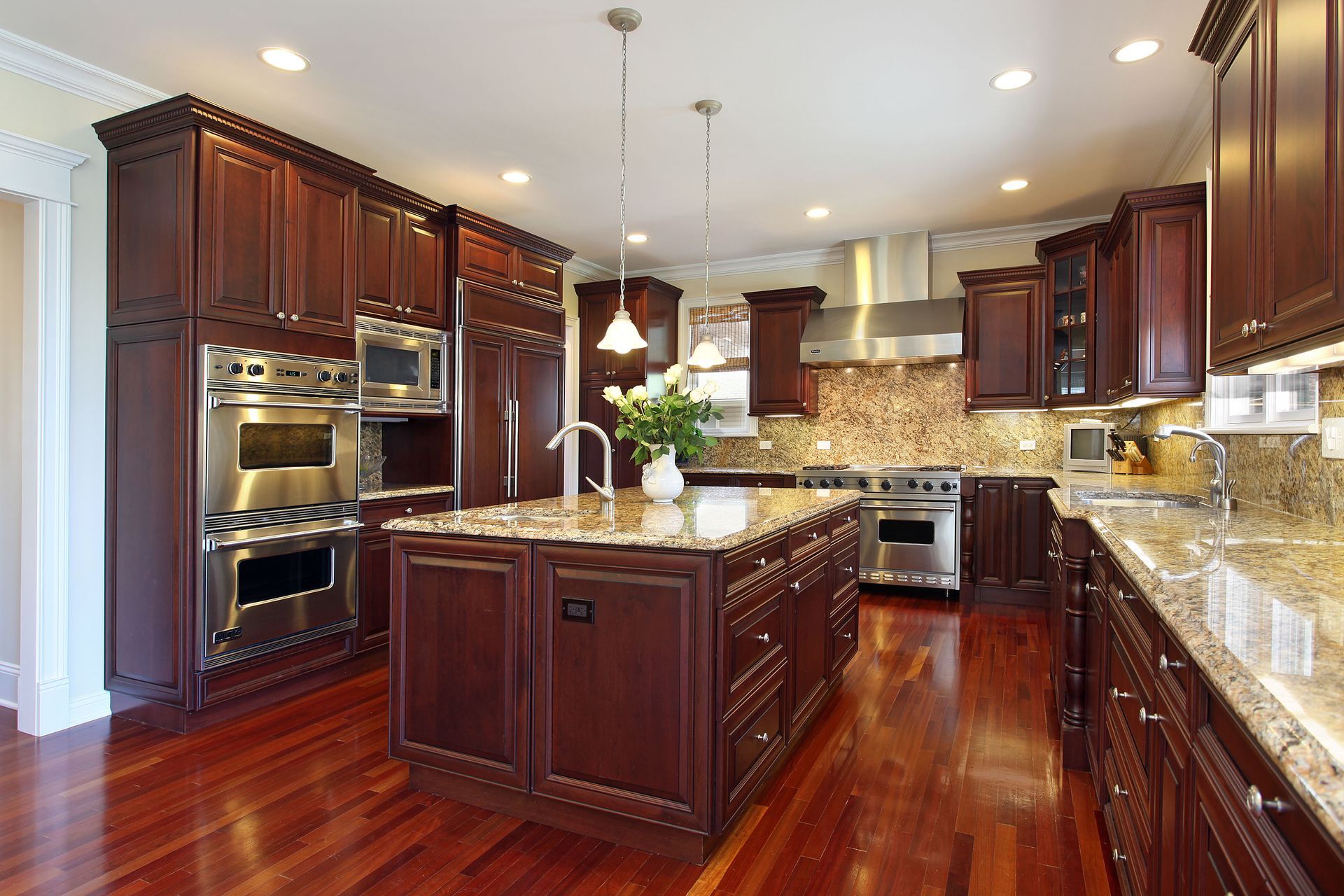
While islands are often associated with larger kitchens, they can still be incorporated into smaller kitchen design layouts when carefully scaled. The key is ensuring the island supports function without disrupting circulation.
A compact island can serve multiple roles, including prep space, casual dining, and additional storage. However, clearance around the structure must remain a priority to avoid restricting movement.
When designed correctly, even a modest island can become a central organizing feature that enhances workflow and improves usability across the entire kitchen.
Zoned Planning for Everyday Efficiency
Zoning is another important strategy used in modern kitchen design to improve organization in smaller homes. Instead of treating the kitchen as a single space, it is divided into functional areas such as cooking, prep, storage, and cleaning.
This method reduces overlap between tasks and helps multiple users navigate the kitchen without interference. It also allows homeowners to tailor the space to their specific routines.
By clearly defining each zone, the kitchen becomes more intuitive to use, even when square footage is limited. This approach is especially valuable in homes where multiple activities occur simultaneously.
Practical Style and Storage Solutions for Small Kitchens
Vertical Storage Systems That Expand Capacity
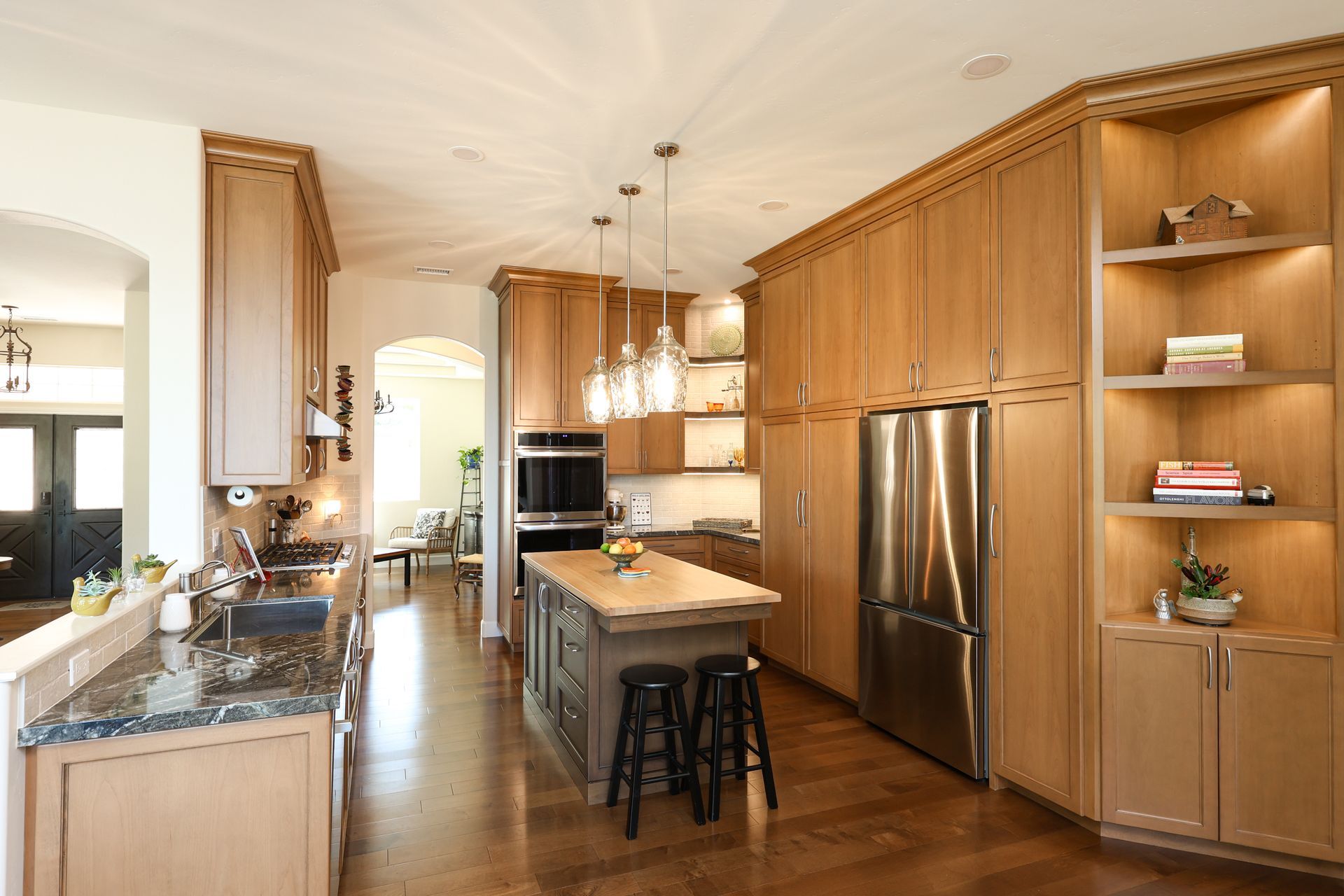
Maximizing vertical space is essential in small kitchen design layouts. When floor area is limited, walls become valuable real estate for storage and organization.
Tall cabinetry, stacked shelving, and overhead storage solutions help increase capacity without expanding the kitchen's footprint. This approach also draws the eye upward, which can make the space feel taller and more open.
Careful organization within these vertical systems ensures that storage remains accessible rather than overwhelming. Frequently used items are kept within easy reach, while less-used items are stored higher or deeper within cabinetry.
Cabinetry Customization for Spatial Efficiency
Custom cabinetry plays a significant role in refining kitchen design layouts for smaller homes. Standard cabinet sizes often fail to fully utilize irregular or compact spaces, which leads to wasted storage potential.
Tailored solutions allow every inch to be used effectively, from corner units to narrow pull-out storage systems. This precision improves both functionality and aesthetics, creating a more cohesive overall design.
Cabinet depth, height, and internal configuration all contribute to how efficiently the kitchen operates. When these elements are aligned with the homeowner's needs, the space becomes significantly more practical.
Material Selection for Visual Expansion
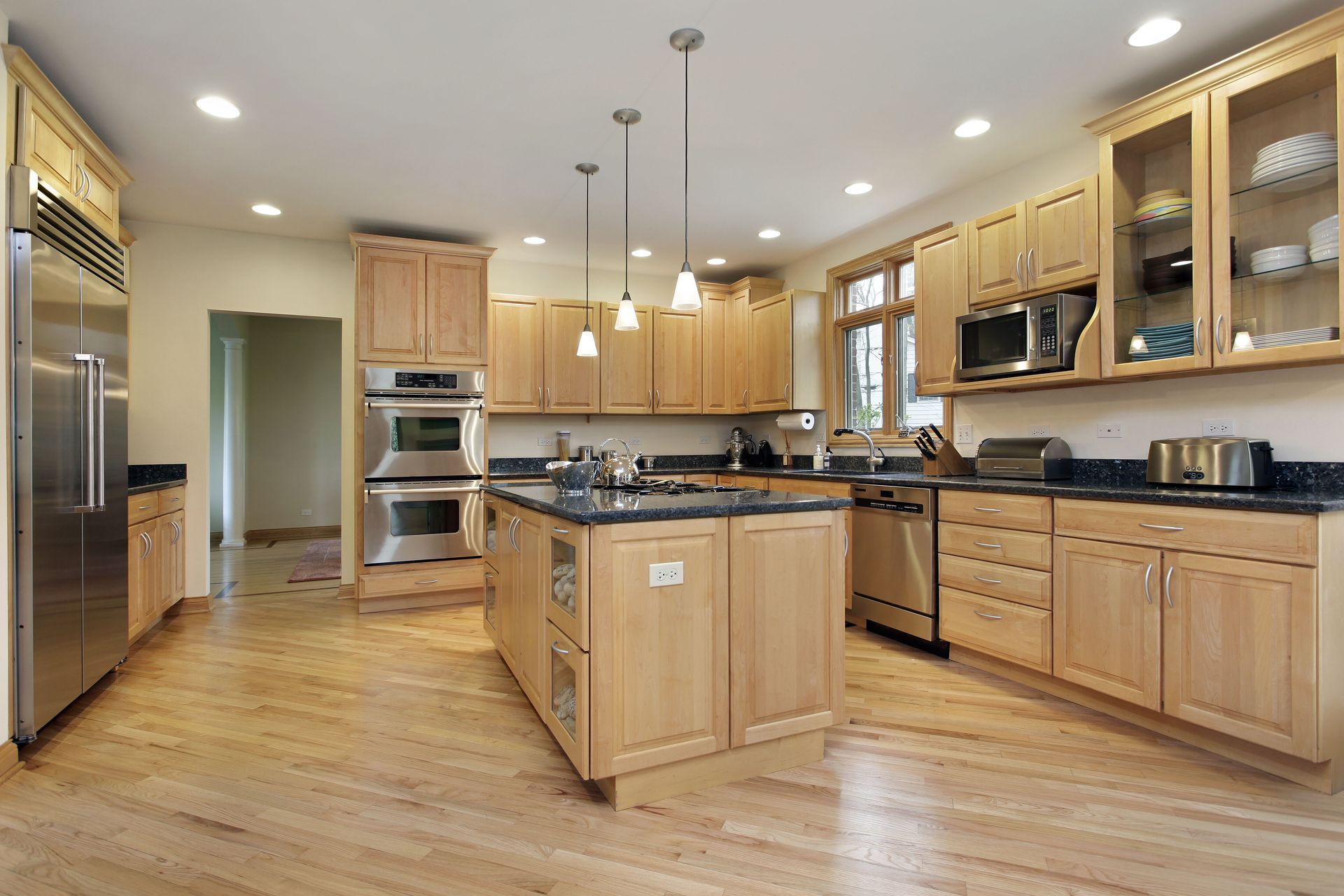
Materials have a strong influence on how kitchen design layouts are perceived visually. Lighter finishes, reflective surfaces, and consistent color palettes can help expand the sense of space in smaller kitchens.
Countertops, cabinetry, and backsplash selections should work together to create continuity rather than visual fragmentation. When done well, this reduces visual clutter and enhances openness.
Durability remains equally important, especially in high-use areas. The goal is to balance visual appeal with long-term performance, ensuring the kitchen remains both attractive and functional over time.
Designing for smaller homes requires more than fitting appliances into limited square footage. It demands thoughtful planning, efficient organization, and a clear understanding of how space is actually used daily. The most effective kitchen design layouts are those that prioritize flow, maximize storage, and create a sense of openness without sacrificing functionality.
When homeowners rethink outdated configurations, they discover that even modest kitchens can deliver exceptional performance. This is particularly relevant given that many existing homes were built decades ago and still reflect older design standards that no longer align with modern living patterns. For expert assistance with choosing an efficient design layout for your kitchen, contact Superior Kitchen & Bath, Inc!